AI Safety & Alignment
Alignment research, interpretability, red-teaming, existential risk, responsible AI
Safety failures = market risk. Regulatory pressure makes this a must-watch
The AI Safety & Alignment sector is currently facing heightened warnings about the risks of rapid AI development, with regulatory pressures intensifying globally as governments and organizations demand stronger safeguards against misuse and existential threats. Experts like Geoffrey Hinton from the University of Toronto and Daniela Amodei from Anthropic are leading calls for immediate action, citing recent AGI advancements as a catalyst for potential catastrophic outcomes, as evidenced by Hinton's quote emphasizing the need to prioritize safety to prevent misuse. This shift underscores a pivotal moment where market stability hinges on proactive measures to align AI systems with human values, amid ongoing research that highlights the urgency of these efforts. Two of the hottest sub-topics are Adversarial Robustness in LLMs and AI Alignment Frameworks. In Adversarial Robustness, researchers such as Percy Liang from Stanford University and Jacob Steinhardt are focusing on fortifying large language models against manipulation, as detailed in their recent paper 'Jailbroken: How Does LLM Safety Training Fail?', which argues that without robust testing, AI could be exploited in real-world applications. Similarly, AI Alignment Frameworks, championed by Paul Christiano and Yoshua Bengio from Mila/Université de Montréal, involve developing techniques for scalable oversight and ethical guidelines, as explored in 'AI Alignment: A Comprehensive Survey', to mitigate existential risks as AGI evolves. A third warm sub-topic, Open Source AI Safeguards, involves balancing innovation with risk, with Clement Delangue from Hugging Face advocating for built-in ethical checks to address misuse in democratized tools. A central debate in the sector revolves around whether AI development should prioritize speed or safety. On one side, advocates like Brad Lightcap from OpenAI and Ilya Sutskever from Safe Superintelligence argue that rapid progress, as seen in OpenAI's safety protocols, enables beneficial AI without unnecessary delays, emphasizing that innovation can coexist with safeguards. Conversely, critics such as Daniela Amodei and Geoffrey Hinton contend that unchecked speed could lead to ethical lapses and misuse, pointing to recent incidents as evidence that prioritizing safety is essential to avoid long-term harm, highlighting a fundamental disagreement on balancing growth with risk mitigation. For investors, the implications are significant: opportunities exist in backing AI safety startups focused on alignment and robustness, driven by increasing regulatory demands that could yield high returns from compliant technologies. However, risks include potential market volatility from safety failures, such as public backlash or stricter regulations, which could devalue investments. Investors should closely monitor advancements in AGI development over the next 1-2 years, as the sector's momentum presents strategic entry points but also stakes that could reshape the AI landscape if risks materialize.
Key Voices in AI Safety & Alignment

Excellent analysis. And Exhibit #3084 in support of my and @sayashk's position that alignment/safety is not a model property, which we first wrote about two years ago https://t.co/b30BHu56QY Whether a particular analysis constitutes p-hacking or a responsible investigation is

Looking forward to this panel discussing the key findings of the International AI Safety Report at the India AI Impact Summit tomorrow! I’ll be joined by @joteo_ylm, @alondra, Adam Beaumont and Lee Tiedrich. https://t.co/yzPgcz7Gfr
Incredible contrast to the ad's reception within the AI bubble. There's a famous marketing cautionary tale — early pressure cooker companies advertised that their products *don't* explode but ended up inadvertently raising the salience of safety fears, tanking the whole category. https://t.co/TZQneashns

For all the talk about AI alignment, I worry we're putting the cart before the horse. You can't steer something you can't control. People often talk about containment and alignment in the same breath, but they're not interchangeable or a package deal. Containment is whether we

Some generous companies in Toronto are funding three lectures on AI safety by Owain Evans on Nov 10, 11, 12. Tickets are $10 and are available at https://t.co/rFwHJPOKsq https://t.co/3mKhgcptbz

The Urgency of Interpretability: Why it's crucial that we understand how AI models work https://t.co/Mz8R23uxgy
New AI safety paper in Science with a lot of authors: https://t.co/nWPaRHeSA3
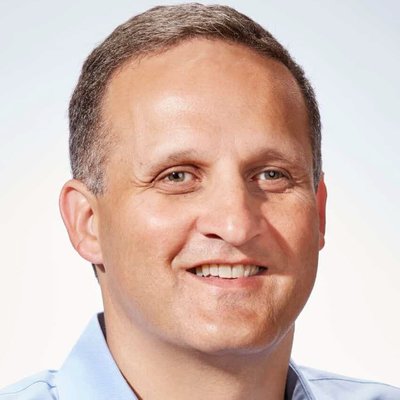
AWS is proud to serve as an inaugural member of the @DHSgov Artificial Intelligence Safety and Security Board. As one of the world’s leading developers and deployers of #AI tools and services, we support fostering the safe, secure, and responsible development of AI technology. We

It's Hard Fork Friday! This week, we discuss the states’ lawsuit against Meta over child safety. Then, YouTube legend @MKBHD joins us to discuss how to succeed there in 2023. And finally, we use DALL-E 3 to make HOT DADS. https://t.co/xqcnO8HyMB
Let’s talk about the big new lawsuit against Meta over child safety. https://t.co/aG2AARGF6C https://t.co/YSfYWPHCQS
I wrote about Discord’s fascinating experiment in trying to rehabilitate wayward teenage trolls. It’s a welcome reminder that trust and safety teams can innovate ➡️ https://t.co/11FkhFbhOZ https://t.co/5f3m0MeUJB

#AI is projected to enhance human productivity and unlock an astounding $16T in value by 2030. But, as with any other powerful technology, AI has the potential for both misuse and risk. At @IBM, we believe smart regulation should be based on 3 core tenets: https://t.co/MUGoI4mU8K https://t.co/O5nQsE16Tg
I wrote about some recent cases of deceptive audio and video on platforms and wondered whether Meta’s Oversight Board is taking the right case. https://t.co/Eqlm8jcTJp https://t.co/j0FFPNzyz0